

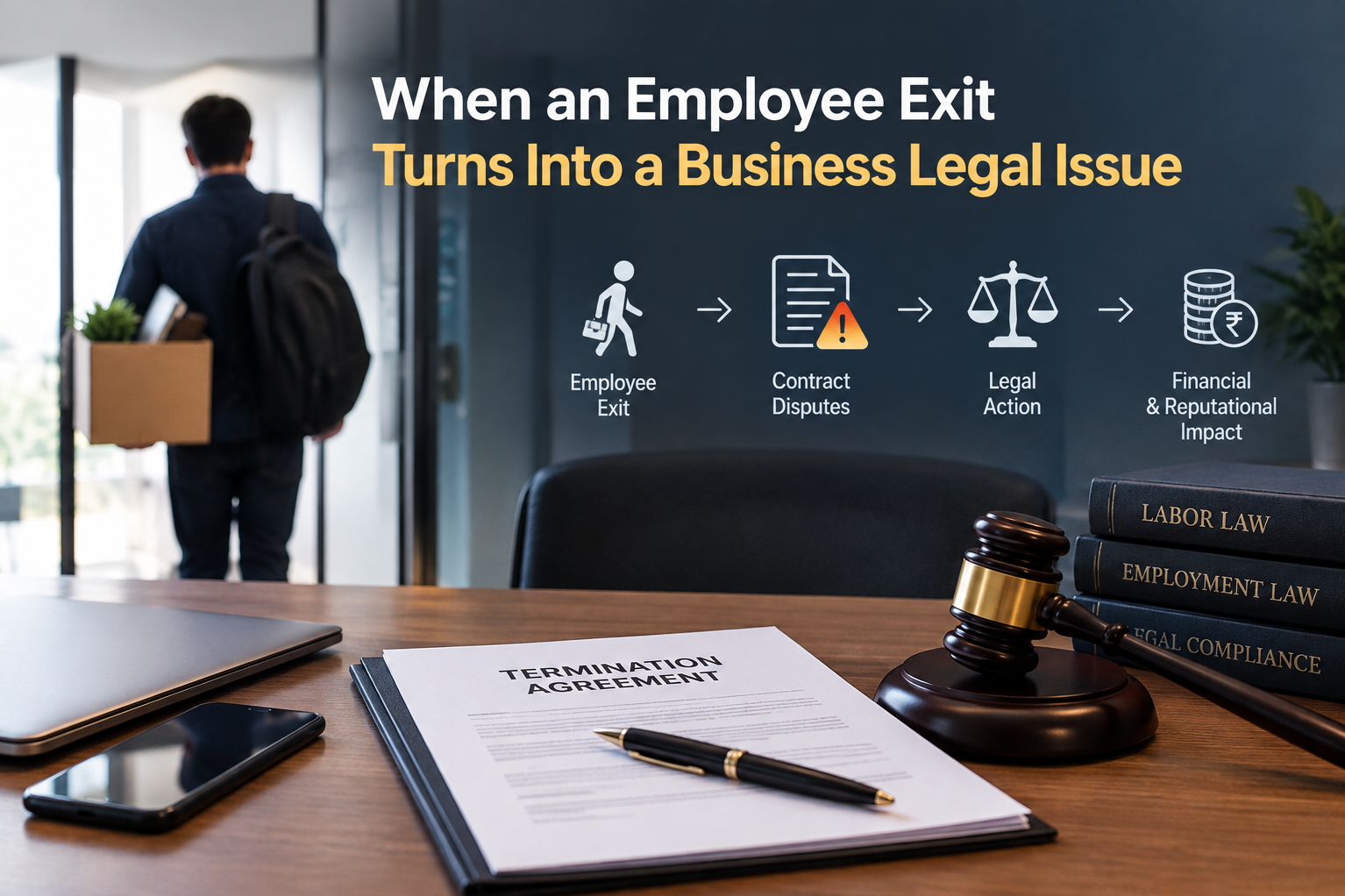
Imagine a growing company in Pune where a senior employee resigns unexpectedly.
The employee handled important client relationships, had access to confidential commercial information, and was involved in strategic projects. After the resignation, management discovers that the employment agreement contains only basic salary and notice-period provisions.
There is no detailed confidentiality clause, no clear process for returning company information, and no properly documented exit procedure.
An apparently routine resignation can quickly raise questions involving Employment Law.
Employment Documentation Matters Before an Exit Occurs
Employment agreements and internal workplace policies help establish expectations during employment as well as at the time of separation.
Depending on the employee's role, responsibilities, applicable legal requirements, and organisational structure, documentation may need to address:
Job responsibilities
Compensation structure
Probation and confirmation
Notice requirements
Confidentiality obligations
Intellectual property
Company property and information
Leave and workplace policies
Disciplinary procedures
Separation formalities
Applicable post-employment obligations
Clear documentation can help both employers and employees understand the terms governing the employment relationship. However, the provisions used should reflect the actual nature of the role rather than relying solely on a standard employment template.
Problems Often Appear When Policies and Contracts Do Not Match
Suppose an employment contract refers to a company policy, but that policy has not been updated for several years. Management may believe one procedure applies, while the employee may rely on a different interpretation of the written terms.
Similar issues can arise when an HR team follows an informal workplace practice that is not reflected in employment agreements or internal policies.
These inconsistencies can become relevant in Employment Disputes, particularly when questions arise regarding notice, disciplinary action, confidentiality, compensation, separation procedures, or other employment obligations.
For businesses in Pune and across Maharashtra, periodically examining whether employment contracts, HR policies, and actual workplace practices remain aligned can help identify areas of uncertainty before an employee exit or disagreement brings them into focus.
HR Legal Compliance Is an Ongoing Process
Hiring documentation should not necessarily be viewed as paperwork that is prepared once and then left unchanged throughout the life of an organisation.
Businesses evolve. Roles change. Teams expand. Reporting structures are reorganised. Remote and hybrid working arrangements may be introduced, and employees may gain access to different categories of business information.
Employment documentation may therefore need periodic review to determine whether it continues to reflect actual workplace arrangements and applicable legal requirements.
Clear Exit Procedures Can Reduce Uncertainty
Employee separation involves more than calculating the final working date.
Depending on the circumstances, an exit process may involve the return of company property, revocation of system access, treatment of confidential information, completion of pending responsibilities, handover of work, final payments, and documentation of separation formalities.
Having these processes clearly documented can make responsibilities easier to understand when an employee resigns or employment otherwise comes to an end.
The objective of preventive employment documentation is straightforward: establish clarity before a disagreement develops.
When employees understand their obligations and employers apply documented procedures consistently, workplace issues can generally be addressed within a clearer organisational framework.
For growing businesses, employment documentation is therefore more than an administrative HR formality. It forms part of broader legal, governance, and operational risk management.